

Baku, August 24, AZERTAC
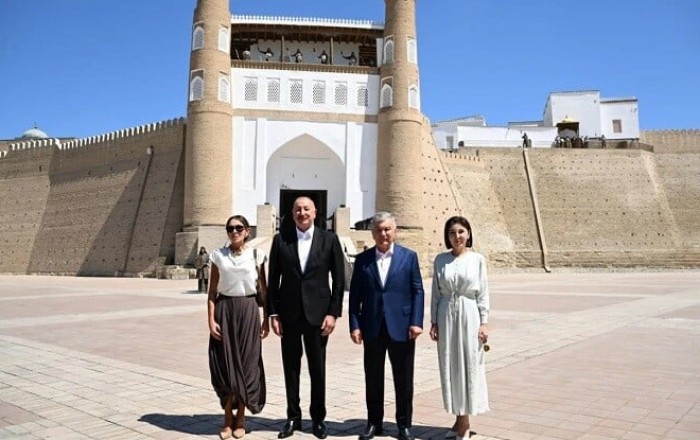
The state visit of President Ilham Aliyev to Uzbekistan gives new strategic impetus to bilateral relations. The visit organically links bilateral cooperation to the broader regional and global agenda of the Organization of Turkic States.
Against the backdrop of emerging regional realities, institutional coordination between Azerbaijan and Uzbekistan is being further strengthened alongside their cultural, historical, political and economic ties.
Azerbaijan–Uzbekistan friendship formalized as eternal
As part of the state visit, President Ilham Aliyev held a one-on-one meeting with President of Uzbekistan Shavkat Mirziyoyev. The Presidents attended the third meeting of the Azerbaijan–Uzbekistan Supreme Interstate Council in Tashkent. In addition, the two leaders participated in groundbreaking and inauguration ceremonies for projects implemented in Uzbekistan.
The high-level events held during the visit demonstrate a significant convergence of the mutually beneficial and constructive foreign policies of Azerbaijan and Uzbekistan, based on their national interests. This creates favorable conditions for the two countries to define their priorities and expand their room for maneuver in the international arena. These factors necessitate further legal consolidation of Azerbaijan–Uzbekistan allied relations.
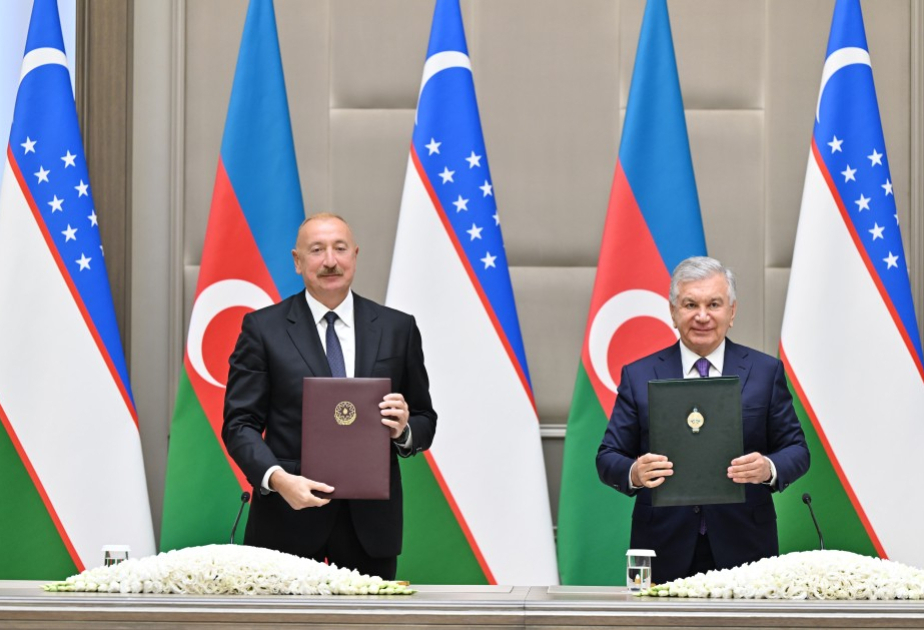
In this context, the signing of the “Treaty on Eternal Friendship between the Republic of Azerbaijan and the Republic of Uzbekistan” during the ceremony for the signing and exchange of documents in the presence of the heads of state is of particular significance.
At the third meeting of the Azerbaijan–Uzbekistan Supreme Interstate Council and in their press statements, President of Uzbekistan Shavkat Mirziyoyev spoke highly of the Treaty.
This document is of vital importance for ensuring the sustainability and continuity of friendly and brotherly ties, as it elevates the strategic partnership between the two countries to a qualitatively new — and the highest political and legal — level. At the same time, the document serves as an important instrument for accelerating integration between Central Asia and the South Caucasus.
In short, the shared vision of the two states and the political and legal foundations of relations between their peoples are being further strengthened. Most importantly, this cooperation opens up broad opportunities for Azerbaijan and Uzbekistan in Eurasian geopolitics. From this perspective, Azerbaijan–Uzbekistan ties can be viewed as an emerging geopolitical platform on a transregional scale that extends beyond the bilateral framework.
Against the backdrop of the implementation of the Zangezur Corridor, this connection will add value to the Eurasian logistics network. At the third meeting of the Supreme Interstate Council, President Ilham Aliyev stated that active efforts are underway toward the realization of the Zangezur Corridor.
Relations within the OTS vision
The visit of President Ilham Aliyev serves to strengthen interaction between Azerbaijan and Uzbekistan across a broad range of areas, while also integrating bilateral ties into the framework of the Organization of Turkic States (OTS). To advance this strategic agenda, new potential areas of cooperation are being explored, and the visit once again demonstrates the relevance of these issues. The fact that President Ilham Aliyev characterized Azerbaijan and Central Asia as a unified geopolitical and geoeconomic region with great potential and even greater opportunities for development in his press statement is particularly noteworthy.
The head of state's articulation of such messages in Central Asia is a manifestation of a resolute approach to advancing large-scale interregional geostrategic integration. Therefore, the broader significance of the visit to Uzbekistan can be summarized in the following main points:
- The Republic of Azerbaijan closely monitors the interests and activities of international and regional actors in Central Asia, as well as their interest in the OTS;
- Official Baku is further strengthening its position in the process of restructuring supply chains in Eurasian geopolitics. From this perspective, Azerbaijan supports priorities aligned with the Middle Corridor connecting China with Central Asia, the South Caucasus and Europe;
- The vast geographical area and natural resources of the OTS member states enhance the organization's position in Eurasian geopolitics. Azerbaijan–Uzbekistan relations and the future trajectory of these ties serve as important indicators of strategic priorities in this dimension;
- Within this framework, the continuation of the China–Kyrgyzstan–Uzbekistan railway project and its connection to routes across the Caspian Sea are of particular importance to Baku and Tashkent. In other words, Chinese cargo passing through the territory of Uzbekistan, which has no direct access to the Caspian Sea, can use two main routes — via Turkmenistan and Kazakhstan — to reach the Caspian Sea.
As can be seen, Azerbaijan and Uzbekistan, which have become essential links in the international transport and logistics chain, make significant contributions to Eurasia's transport connectivity. On the other hand, the formalization of the Azerbaijan–Uzbekistan strategic axis through bilateral agreements and other documents coincides with a period of uncertainty among global and regional centers of power. Therefore, it can be argued that the institutionalization of the OTS is also evolving around common approaches to security and defense.
Azerbaijan and Uzbekistan view the agenda of the OTS — which is built around cultural, linguistic, educational and national identity factors — as an important potential instrument for giving their foreign policies a stronger geopolitical dimension. Meanwhile, cooperation in security and defense carries particular weight in this strategic portfolio. From this point of view, Azerbaijan's leadership position in the South Caucasus directs an important part of its broader strategic vision toward Central Asia.
This factor further strengthens strategic planning and coordination efforts in relations between Azerbaijan and Uzbekistan. At the same time, it serves to reinforce the security and defense resilience of the two countries and the wider OTS framework in addressing modern challenges.
Preserving and strengthening peace and stability in Central Asia, while turning the region into a sustainable development zone, also opens up significant opportunities for attracting major investments.
Conclusion
President Ilham Aliyev's state visit to Uzbekistan moves the strategy pursued by Baku and Tashkent of viewing the South Caucasus and Central Asia as a single geopolitical space into a more active phase. Such a reshaping of regional interests further expands the scope of their strategic vision.
Projects encompassing the South Caucasus and Central Asia, including the transport and logistics agenda, also increase Azerbaijan's strategic flexibility in foreign policy. At the same time, through the development of transport routes, Azerbaijan and Uzbekistan are increasingly aligning their policies on issues shaping security across the Eurasian logistics and supply-chain network.
Source: azertag.az


 scorpion.az