

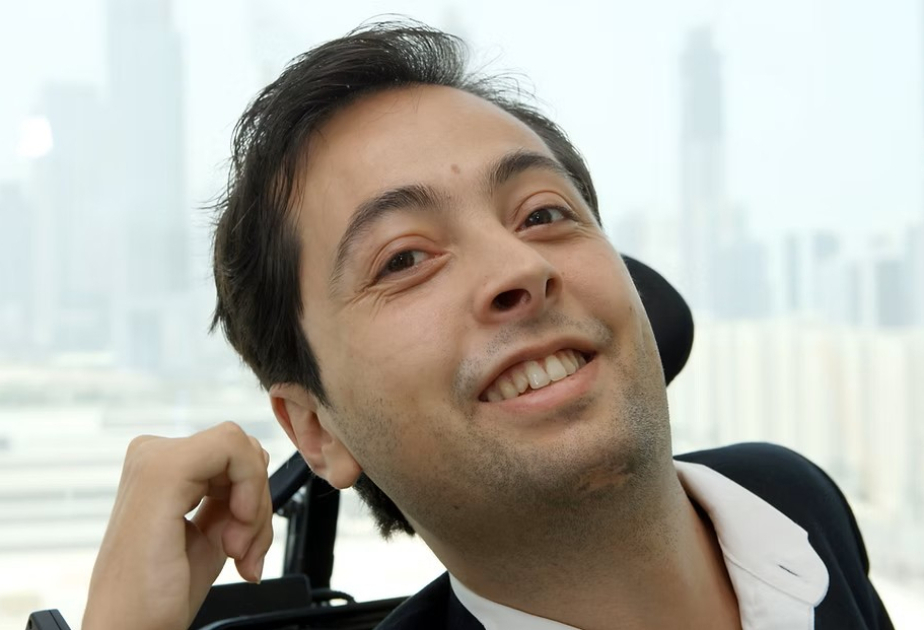
Baku, June 11, AZERTAC
Even before the 13th session of the World Urban Forum (WUF13) was held in Baku, issues of sustainable development, inclusivity, and urban adaptation to emerging challenges were already at the forefront of the international agenda. However, the forum in the Azerbaijani capital added a new dimension to these discussions by emphasizing that a city cannot be considered truly sustainable unless it is accessible to all of its residents without exception. Particular attention was devoted to universal design, the participation of persons with disabilities in decision-making processes, and the creation of people-centered urban environments.
In an interview with AZERTAC, globally recognized expert in inclusive urban development, urban design professor, and public advocate Victor Santiago Pineda highlighted the significance of WUF13 outcomes for global urban development, Azerbaijan’s role in advancing inclusive growth, the prospects of smart city and smart village initiatives, and the valuable international lessons that may emerge from the reconstruction of Garabagh and East Zangezur.
– Mr. Pineda, what do you consider the most important outcomes of WUF13 in Baku for the sustainable development of urbanization worldwide?
– The World Urban Forum serves as a critical global platform for advancing inclusive urban development. The most significant outcomes of WUF13 in Baku stem from the recognition that urban resilience and safety cannot be achieved without addressing the needs of all residents, particularly persons with disabilities and other socially vulnerable groups.
Among the forum’s key achievements was the emphasis on participatory governance models that ensure the meaningful involvement of persons with disabilities in urban planning processes, the integration of universal design principles into climate adaptation strategies, and the recognition that accessibility is not merely a technical requirement but a fundamental human right and an essential prerequisite for sustainable urban development.
Particularly important was the forum’s focus on bridging the gap between policy commitments and practical implementation. Many cities around the world still face challenges in translating international frameworks such as the Convention on the Rights of Persons with Disabilities (CRPD) and the New Urban Agenda into tangible improvements that directly enhance people’s lives.
– In your view, what role can Azerbaijan play in the global sustainable urban development agenda?
– Azerbaijan has a unique opportunity to serve as a bridge between Europe and Asia in promoting inclusive and sustainable urban development. As a host of major international events such as WUF13, the country can demonstrate leadership by showcasing innovative approaches to urban accessibility, climate resilience, and social inclusion through its own urban transformation initiatives.
Azerbaijan’s investments in infrastructure modernization create favorable conditions for embedding universal design and accessibility principles at the planning stage rather than attempting to retrofit them later. This approach is not only more cost-effective but also delivers significantly greater social impact.
Moreover, Azerbaijan can make a valuable contribution to the international dialogue by demonstrating how middle-income countries can successfully balance rapid urbanization with inclusive development principles. This experience may prove highly relevant for many nations facing similar challenges. By enabling persons with disabilities to actively participate in urban planning and decision-making processes, Azerbaijan can become a model for the type of participatory governance required to achieve the United Nations Sustainable Development Goals.
– Azerbaijan is actively implementing Smart City and Smart Village projects. How valuable could this experience be for the international community?
– Azerbaijan’s Smart City and Smart Village initiatives have the potential to offer important lessons to the international community, particularly in terms of combining advanced technologies with inclusive development principles. The true value of these projects lies not only in technological innovation itself, but also in how these innovations are designed and implemented to ensure equal access and benefits for all residents.
To maximize their international relevance, such initiatives should place accessibility and universal design at the center of digital infrastructure development. Smart technologies must serve persons with disabilities, older adults, and other vulnerable groups. This includes creating accessible public transportation systems, inclusive digital platforms that facilitate civic participation, and smart infrastructure that removes barriers rather than creating new ones, thereby expanding opportunities for full participation in society.
The Smart Village concept is especially valuable because it addresses accessibility and inclusion in rural areas—a topic that often receives insufficient attention. Many countries struggle to extend inclusive development principles beyond major urban centers, and Azerbaijan’s experience could serve as a roadmap for ensuring that modern technologies and development benefits reach all communities, not just large cities.
– How do you assess Azerbaijan’s efforts to restore and rebuild the territories liberated from occupation—Garabagh and East Zangezur?
– The reconstruction and redevelopment of Garabagh and East Zangezur create a unique opportunity to build inclusive communities virtually from the ground up. Such opportunities are extremely rare in the field of urban development. It is a chance to integrate accessibility, universal design, and inclusive planning principles from the earliest stages of reconstruction rather than attempting to incorporate them afterward.
These efforts should be evaluated primarily through the lens of how consistently they embrace inclusive development principles. This includes the meaningful participation of persons with disabilities and other socially vulnerable groups in planning processes, adherence to universal design standards in housing and infrastructure development, the creation of accessible public spaces and transportation systems, and the establishment of economic opportunities that are open to persons with disabilities.
The reconstruction process must be guided by the understanding that genuine resilience and long-term development cannot be achieved without the full participation of all members of society. This means that persons with disabilities should not merely be consulted but should play an active role in decision-making processes that shape the future of these territories.
Ultimately, the success of reconstruction will be measured not only by the number of buildings erected or the scale of infrastructure developed, but by the extent to which the rebuilt communities become truly accessible, inclusive, and welcoming places for all residents without exception.
Author – Tamilla Mammadova
Source: azertag.az





 scorpion.az